4 Structural Variables That Affect Long-Term Stable Operation of FIPFG Equipment
4 Structural Variables That Affect Long-Term Stable Operation of FIPFG Equipment
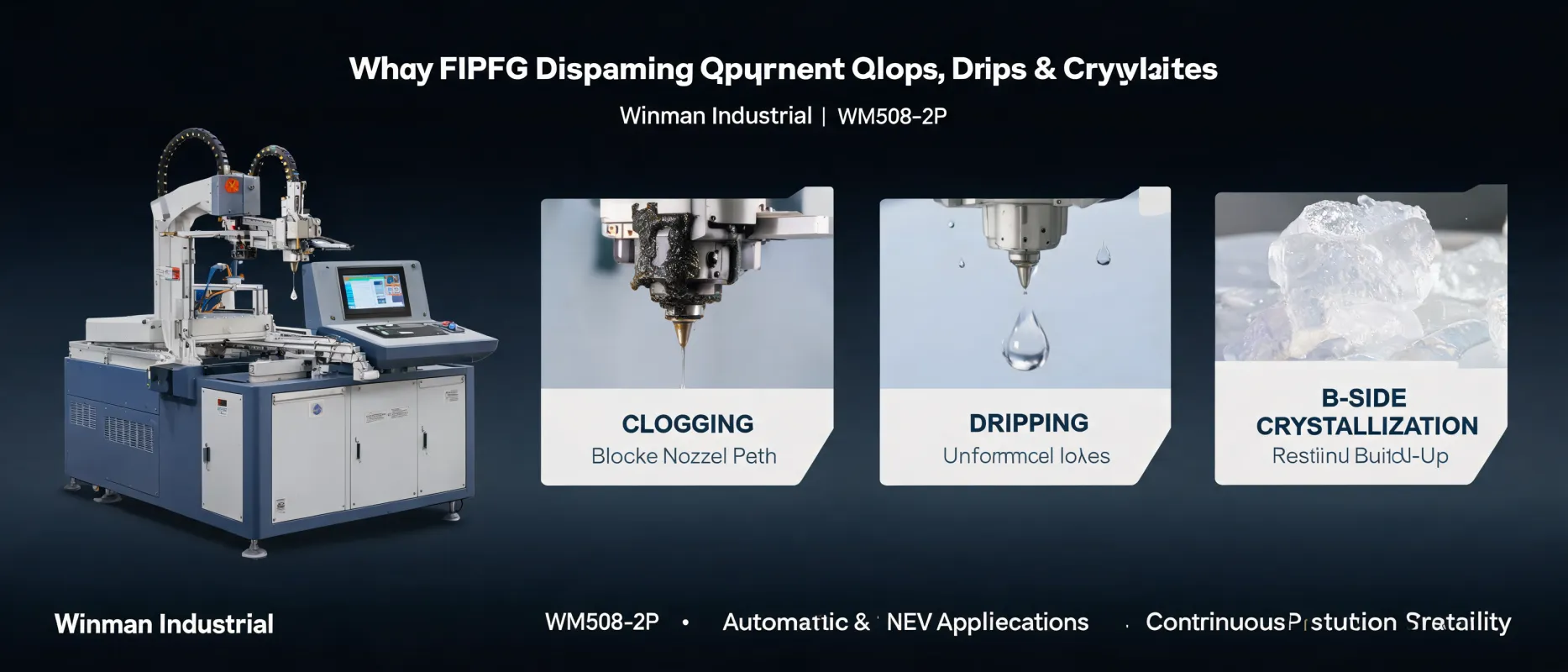
For automotive, NEV, energy storage, electrical cabinet, and photovoltaic sealing applications, long-term equipment stability is not determined by a single component. It is the result of how the system is designed, how materials are delivered, how circulation is managed, and how the machine is cleaned and recovered during daily operation. Shanghai Winman Industrial Co., Ltd. focuses on FIPFG point dispensing and sealing systems, and the WM508-2P is developed around these practical operating requirements.
Why stable operation depends on structure, not only on software
In FIPFG processes, stable sealing performance requires consistent mixing, accurate bead formation, and predictable recovery after interruption. Even when the control logic is advanced, the physical structure of the machine still determines whether the system can maintain output quality over long shifts, multi-shift production, and continuous industrial use.
The WM508-2P is designed with this logic in mind. Its structure supports high-precision application, stable proportion control, and efficient operation for production environments that demand repeatable sealing quality and controlled residue.
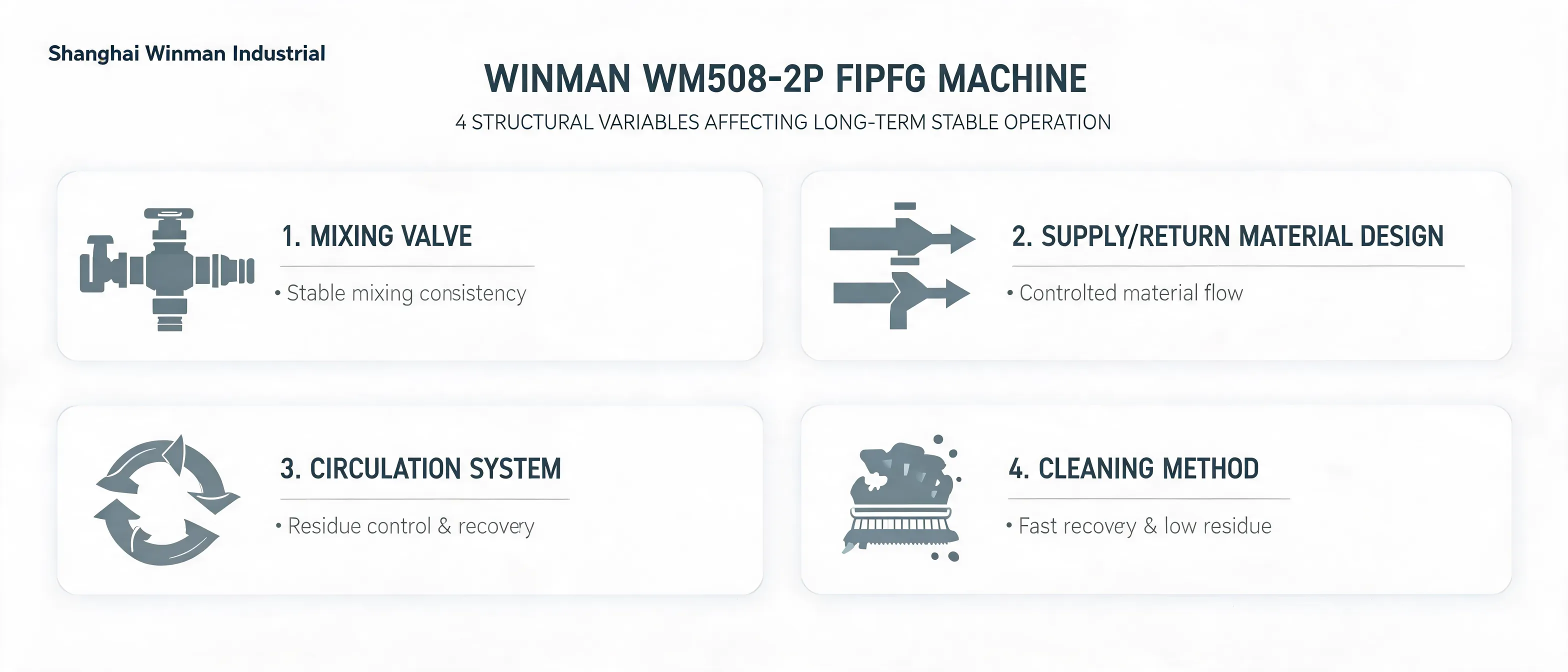
The 4 structural variables
1. Mixing valve performance
The mixing valve is one of the most important factors in FIPFG equipment stability. It directly affects how evenly A and B components are blended, how accurately the bead is formed, and how quickly the system responds during start, stop, and restart cycles. A stable valve structure helps reduce fluctuations in dispensing quality and supports consistent sealing results.
2. Supply and return material design
The design of the supply and return channels affects pressure balance, material freshness, and the chance of residue remaining in the system. A well-planned material path supports more stable feeding, smoother material recovery, and better control of unused material during pauses or changeovers.
3. Circulation system design
Circulation is essential for maintaining material condition over time. It helps support flow stability, minimize material settling, and improve the system’s readiness after downtime. In production lines that run for long periods, circulation design is closely related to recovery speed and operational consistency.
4. Cleaning method and recovery logic
Cleaning is not only a maintenance task; it is part of stable operation. The cleaning method determines how quickly the machine can return to a usable state, how effectively residue is controlled, and how much interruption is introduced during daily operation. Faster recovery supports higher line efficiency and reduces unplanned downtime.
How these variables affect daily production
Why this matters for the WM508-2P
The WM508-2P is positioned as a smart high-spec FIPFG machine for demanding sealing applications such as automotive instrument panels and engine compartment sealing gaskets. Its long-term stability depends on coordinated performance across the mixing head, material delivery structure, circulation management, and cleaning logic. This is especially important for customers that need continuous operation, consistent bead quality, and controlled maintenance intervals.
Product characteristics relevant to stable operation
- German FIPFG process foundation: supports precision-oriented sealing application.
- Dual-station structure: helps improve production continuity and reduce manual labor dependence.
- German Sonderhoff control system: contributes to stable control behavior and easier maintenance workflows.
- Dynamic mixing head design: supports proportion control and consistent material blending.
- Remote maintenance, plasma treatment, and auto refill support: help align the machine with modern automated production needs.
Typical evaluation focus for technical teams
When evaluating FIPFG equipment for long-term use, technical teams usually focus on more than output speed. A practical review should include residue control, restart behavior, cleaning efficiency, material stability, and whether the structure supports predictable production across long shifts.
Stable FIPFG operation is built on structure, material management, and maintainability. A machine that is easier to control, clean, and recover can support more reliable production over time.
Shanghai Winman Industrial’s approach
As a manufacturer focused on FIPFG dispensing and sealing systems, Shanghai Winman Industrial Co., Ltd. combines process understanding with equipment design experience. The goal is not only to deliver a machine, but to support a sealing solution that can be aligned with the customer’s production environment, application requirements, and long-term operating expectations.
For customers in Europe, the Middle East, and Asia, this approach is particularly relevant when production lines need stable sealing quality, controlled maintenance, and dependable performance in automotive and NEV-related applications.





Popular articles