
Client Cases · FIPFG In-situ Foaming Sealing · Two-Component PU Foam Dispensing · Sealing for Automotive Electrical Control Cabinets and Door Panels
For Tesla on-board electrical control cabinet and door panel sealing applications, WINMAN INDUSTRIAL introduced the WM601 two-component PU fully automatic FIPFG dispensing solution. To address issues such as material caking, pipeline blockage, and insufficient stability in semi-automatic processes, the solution reengineers high-precision path dispensing, dynamic mixing, online metering and ratio control, and remote maintenance capabilities, helping production lines achieve more stable in-situ foaming sealing and scalable mass production delivery.
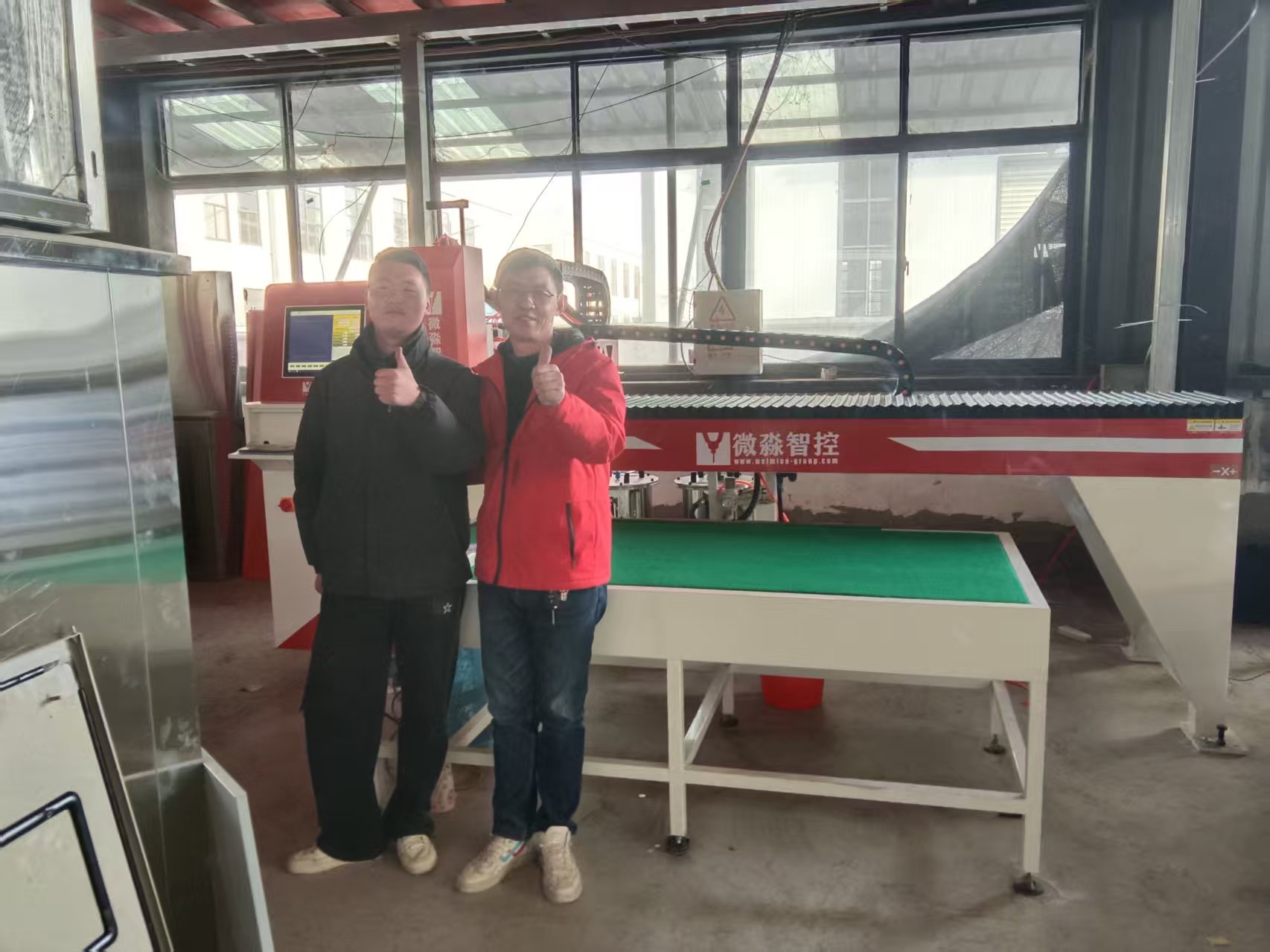
On-site project photos
In sealing applications such as in-vehicle electrical control cabinet housings and distribution cabinet door panels, the sealing process is not only related to waterproofing, dust protection, and weather resistance, but also directly affects line takt time, maintenance frequency, and the consistency of mass delivery. Tesla originally adopted a semi-automatic two-component PU foaming sealing process, but during continuous production it faced issues such as material caking inside the equipment, pipeline blockage, and downtime caused by failures, resulting in higher maintenance costs and difficulty in maintaining long-term process stability.
For industrial manufacturing scenarios of this kind that are oriented toward mass production, the sealing solution must simultaneously ensure the protection rating, repeatability, process continuity, and equipment maintainability. Based on this need, WINMAN INDUSTRIAL takes FIPFG in-situ foaming sealing as its core and has built an automated dispensing and sealing process that is better suited to large-scale production.
Addressing Tesla's process challenges, WINMAN INDUSTRIAL, based on its self-developed WM601 two-component PU fully automated dispensing machine and combining it with original German RAKU-PUR® polyurethane sealing material, has developed an integrated FIPFG on-site foaming and sealing solution for automotive electronic control cabinets and door panels. This solution emphasizes simultaneous optimization across four dimensions: material control, trajectory control, pressure protection, and production line collaboration, thereby improving process stability and mass production adaptability.
| Key Capabilities | Corresponding function |
|---|---|
| Dynamic Mixing Technology | Achieve precise mixing of two-component materials, reducing the risk of agglomeration and unstable material feeding. |
| Online Metered Proportioning | Maintain a stable foam material ratio to improve the consistency of sealing performance. |
| Dual-Core Control and Pressure Protection | Real-time monitoring of trajectory and pressure parameters enhances equipment operational reliability. |
| High-precision path dispensing | Combined with fixture positioning and repeat accuracy control, it ensures a precise and consistent sealing path. |
| Remote Maintenance and Online Monitoring | Improve commissioning and response efficiency to support stable production line operation. |
After the solution was implemented, the sealing process for Tesla door module panels and related cabinet enclosures achieved more stable performance during continuous production, making the overall production line better suited to the requirements of large-scale mass production.
This case shows that in applications such as in-vehicle electrical control cabinets, door panel sealing, and similar industrial enclosures, what truly determines delivery stability is not just the material itself, but whether material control, equipment control, and production line coordination form a closed loop. For manufacturers that need to upgrade from semi-automatic processes to stable mass production, the value of FIPFG in-situ foamed sealing lies in clearer process boundaries, more controllable repeatability, and a standardized production model that is easier to implement.
As a manufacturer specializing in FIPFG dispensing and sealing systems, WINMAN INDUSTRIAL continues to focus on two-component PU foam dispensing, high-precision path control, online metering and mixing ratio control, and production line integration capabilities, providing intelligent sealing solutions better suited to actual production for industries such as automotive lithium batteries, energy storage systems, electrical control cabinets, and photovoltaic equipment.
FIPFG in-situ foam sealing, two-component PU foam dispensing, Tesla on-board electric control cabinet sealing, door panel sealing and IP protection, high-precision path dispensing automation, dynamic mixing and online metering ratio control, pipeline anti-clogging and anti-caking control, remote maintenance and production line stability, fixture positioning and repeatability control, mass production yield improvement and cost optimization.
Say goodbye to material clumping, clogged lines, and the challenges of frequent downtime and maintenance. With mature FIPFG foam sealing technology and the WM601 fully automatic dispensing machine, you can quickly upgrade to automated sealing processes and steadily improve production capacity and product yield.
Get a Free Customized Sealing Process Solution